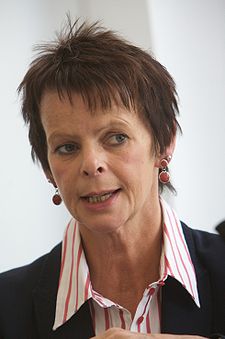
Okay, so I know that posting this here is king of cheating because this isn't even a new post. I am working on one right now; I have my deck doors swung open looking over Aro Valley and I have a custard square from Aro Bake, both of which are critical to writing success. This article is something I have written for Jason Mann's photography project Reclaim Advertising. All of the photos that appear throughout the post are pictures of me that Jason has taken as part of the project. You can see other photos here (including this one of my lady friend) and his wonderful girlfriend Coley has written a blog post here which explains more about Reclaim Advertising, and includes some of her writing for the magazine that Jason is publishing as a culmination of his work. I apologize if some of this article is a little boring or self indulgent for regular readers, as a lot of the stuff I have touched on I have written about before on this blog. I will be less boring next time, I promise. The custard square is helping with that.
I’m not sure if you’ve noticed, but a serious epidemic is plaguing fat people. Symptoms include headlessness, waddling and the wearing of khaki shorts. The headless fatty affliction is most visible in news stories about the obesity epidemic; news stories pinned on scientific information which is usually funded by weight loss companies or gastric band manufacturers. Often cases of headless fatty can be seen in infomercials for diet pills and for bizarre and expensive contraptions that apparently make it easier for one to do a sit up, even though all that is required is merely sitting up.
I posed in these photos for Jason Mann’s Reclaim Advertising project because I was getting really sick and tired of how fat bodies are depicted in the media, both without heads and without dignity. I wanted Jason to take photographs of me being fat and sexy, because to me that seemed like a radical act. In the media fat is not sexy. Images of headless fatties, with their waggling asses and their shifting tummies are not seen as sexual, whereas close ups on tight buttocks and rippling abdominals seem almost pornographic. In our culture ‘fat’ and ‘sexy’ are seen as mutually exclusive because the word ‘fat’ is an insult. Lately I’ve been trying to change that, just in my daily life, in between blogging and going to work and drinking whiskey. I’ve been trying to use fat as a describing word, because saying that I am fat should carry the same cultural weight as saying that I have green eyes. Which is none. Waxing lyrical about being fat should be culturally weightless, if you will.

I decided to use the three letter F Word after reading the article ‘Does My Butt Look Fat?’ by Fat Acceptance blogger Kate Harding. Harding writes about how the word fat does not just mean fat in our culture. Harding observes that fat can mean ugly, smelly, unhealthy and lazy. Fat can mean ignorant. Fat can mean poor. Fat can mean unlovable or undisciplined. But fat never just means having more adipose tissue than other human beings.
The fat acceptance movement is trying to change that. Fat acceptance is based on the radical notion that human beings deserve respect no matter what their body looks like. It is not about promoting being fat. It is not about saying that fat bodies are better than thin bodies in the obnoxious tradition of ‘Real Women Have Curves’, because all women are real women. It is about rejecting body surveillance culture and body shame. Fat acceptance is often about separating ‘fat’ from ‘unhealthy’, and rejecting the assumption that it is possible to tell how healthy someone is based on what they look like. Fat acceptance is about how the Body Mass Index is bullshit, because unhealthy thin people are not getting the medical attention they deserve. It is about Linda Bacon’s medical mantra of Health At Every Size, because Pro-Health is more effective than Anti-Obesity. It is about ending discrimination because you can’t shame a person into being thin, because nobody wants to look after their body if they hate it. Fat acceptance is also about respecting the choices that people make for their own bodies, because health should not be a prerequisite for respect. It is about how nobody kicks up a fuss at cyclists or adventure sports enthusiasts for being a drain on the tax payer and the health care system. For me, fat acceptance has been about rejecting the urge to body snark as a bonding activity with my female friends. Fat acceptance is not just about fat people. It is for everyone, because everyone deserves respect.
I am so pants-wetting-ly inspired by the work of so many clever, insightful and provocative Fat Acceptance bloggers, whose work I have internalised and probably inadvertently plagiarised. Harding, who I mentioned above and who writes at Shapely Prose. Lesley Kinsel from Fatshionista; Natalie Perkins from Definatalie; Marianne Kirby from The Rotund, Elizabeth from Spilt Millk; Samantha Thomas from The Discourse, Frances from Corpulent; Tasha Fierce from Red Vinyl Shoes; Charlotte Cooper from Obesity Timebomb; Jessica from Tangled Up In Lace; Nick Perkins from Nicholosophy; Ragen Chastain from Dances with Fat; Melissa McEwen from Shakesville. These writers are part of a thriving and exciting fatosphere on the Internet where bloggers share their writing; where the sartorially minded post pictures post pictures and convene to discuss major ‘fatshion’ events like the release of infamous fat singer Beth Ditto’s Evan clothing range.
Saying the word fat is still hard for me, but thanks to the fatosphere it is easier than it has ever been. I have always known that I am fat. To find your best friend at my primary school you had to find someone who could fit their thumb and forefinger around your wrist. My wrist was too big. The next day I ordered only an apple from the school canteen. I was nine. By using the word fat I am trying to reverse the last thirteen years of body shame, starting with that apple. It’s not easy. Sometimes it’s actually hard. Advocating for fat acceptance does not magically cure every negative thing that I have internalised about my body. I haven’t forgotten the heckling in the street or the fat jokes or the Facebook group “Big Boobs Don’t Count If You’re Fat.” I have not reached a Utopian state of permanent body love, where it rains Maltesers and where there are limitless wheels of Brie. But I am trying.
These photographs are part of that. When Jason took those photographs of me it was a counteraction to every headless fatty photograph that I see in the media. I wanted to recreate a perfume advert, and reclaiming this kind of advertising was an action against everybody who has ever said that fat people smell, or that they are disgusting. (Do you know that when Lee Daniels, the Director of Precious, started working with Gabourey Sibide he was surprised she didn’t smell?) These photographs, like pictures on fatshion blogs and like Aquaporko, a fat lady synchronized swimming team in Australia, are about normalising fat bodies and separating ‘fat’ from ‘ugly’ and from ‘unhealthy’. These photographs are about humanising fat people. These photographs are about my head. And my fat. In the same frame, at the same time. Looking sexy.